Call: 08045814959
 Send Inquiry
 Send Inquiry
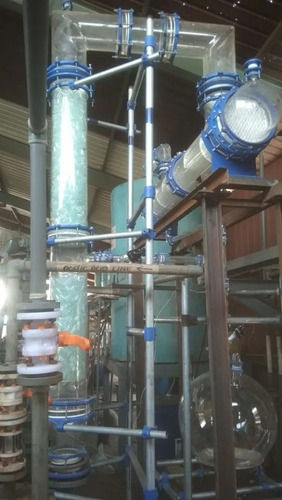
Glass Tube Heat Exchanger
Price 50000 INR/ Piece
MOQ : 1 Unit
Glass Tube Heat Exchanger Specification
- Temperature
- -10C to +150C
- Number of Pipe
- 12 tubes (standard design)
- Max Pressure
- 3 bar
- Thickness
- Glass tubes: 6 mm; Shell: 8 mm
- Diameter
- Standard tube diameter: 25 mm; shell diameter: 150 mm
- Max. Capacity
- Up to 60,000 Kcal/hr
- Condition
- New
- Structure
- Shell and Tube (Tube-in-shell design)
- Liquid Flow Rate
- Up to 2000 LPH (litres per hour)
- Working Presssure
- 0.5 to 3 bar
- Power
- Not Applicable (No electrical power required)
- Weight
- Approximately 30 kg
- Dimensions
- Customizable; standard: 1200 mm length x 250 mm width x 350 mm height
- Application
- Chemical process, pharma, laboratory, pilot plants, heat transfer/cooling
- Tube Sheet
- PTFE (Polytetrafluoroethylene)
- Tube Material
- Borosilicate Glass 3.3
- Maintenance
- Easy disassembly and cleaning
- Heat Transfer Area
- 1 to 10 m² (as per model)
- Suitable Media
- Acids, water, organic solvents; not recommended for high-pressure steam
- End Connections
- Flanged, PTFE-lined
- Shell Material
- Borosilicate Glass or PTFE-lined MS (custom)
- Mounting
- Horizontal or vertical
- Design Standard
- DIN and ISO
- Leakage Protection
- Double O-ring seals
Glass Tube Heat Exchanger Trade Information
- Minimum Order Quantity
- 1 Unit
- Payment Terms
- Cash Advance (CA), Cash in Advance (CID), Cheque
- Supply Ability
- 1 Unit Per Day
- Delivery Time
- 7 Days
- Main Export Market(s)
- Asia, Australia, Central America, North America, South America, Eastern Europe, Western Europe, Middle East, Africa
- Main Domestic Market
- All India
About Glass Tube Heat Exchanger
| Country of Origin | Made in India |
| Medium Used | pharama/chemicals |
| Usage/Application | For Pharmaceutical Industry |
| Brand | Gujarat Scientific and polymer |
| I Deal In | New Only |
| Heat Transfer Type | as per requirements |
Precision Engineering for Demanding Applications
Manufactured to exacting DIN and ISO specifications, this glass tube heat exchanger provides optimal performance for chemical processes, laboratory research, and pilot-scale projects. Its corrosion-resistant borosilicate and PTFE components ensure durability and compatibility, even with aggressive media, making it a reliable choice for modern industry.
Customizable Design for Diverse Needs
Choose between standard and custom options for dimensions, shell material, and end connections. The tube-in-shell design, horizontal or vertical mounting capability, and range of heat transfer areas (1-10 m2) allow users to adapt the heat exchanger for different application requirements, from cooling to heat recovery processes.
Effortless Maintenance and Operation
The heat exchanger's structure supports straightforward disassembly, cleaning, and reassembly. With double O-ring seals to minimize leakage and flanged, PTFE-lined connections for secure installation, routine servicing is simplified, reducing downtime and enhancing operational efficiency.
FAQ's of Glass Tube Heat Exchanger:
Q: How is maintenance performed on the Glass Tube Heat Exchanger?
A: Routine maintenance is straightforward thanks to its easy-to-disassemble structure and double O-ring seals. Users can quickly access internal components for cleaning and reassembly, ensuring high hygiene standards and minimal downtime.Q: What types of fluids can be processed with this heat exchanger?
A: This model is suitable for handling acids, water, and organic solvents. It is specifically not recommended for use with high-pressure steam, but is ideal for chemical, pharma, and laboratory applications involving corrosive or sensitive fluids.Q: When should I choose PTFE-lined mild steel over borosilicate glass for the shell material?
A: PTFE-lined mild steel shells are preferable when extra chemical resistance is required or when the process involves more demanding mechanical conditions. Borosilicate glass shells are optimal for transparency and corrosion resistance in environments with less physical stress.Q: Where can this heat exchanger be mounted?
A: It offers flexible installation, and can be mounted horizontally or vertically, depending on the available space and process requirements. This adaptability makes it suitable for diverse setups in plants and laboratories.Q: What is the benefit of double O-ring seals in this design?
A: Double O-ring seals provide enhanced leakage protection, minimizing the risk of fluid escape even under fluctuating pressure. This improves safety, operational reliability, and reduces maintenance needs.Q: How does the customizability of dimensions and heat transfer area improve process performance?
A: With customizable size options (standard: 1200 mm x 250 mm x 350 mm) and heat transfer areas from 1 to 10 m2, you can tailor the exchanger's capacity for specific requirements. This ensures efficient thermal management, maximizes throughput, and supports a wide range of process scales.Q: What are the usage advantages over conventional metal heat exchangers?
A: Borosilicate glass and PTFE materials offer excellent corrosion resistance, transparency for visual inspection, and compatibility with aggressive chemicals. Additionally, the non-metallic design ensures reduced contamination and straightforward cleaning, enhancing safety and process integrity.
Tell us about your requirement

Price:
Quantity
Select Unit
- 50
- 100
- 200
- 250
- 500
- 1000+
Additional detail
Mobile number
Email

More Products in Glass Heat Exchangers Category
Shell And Tube Glass Heat Exchanger
Price 50000 INR / Piece
Minimum Order Quantity : 1 Piece
Weight : 85 kg
Structure : Other, Shell & Tube Glass Construction
Dimensions : 1200 mm (Length) x 150 mm (Diameter)

MS PTFE glass Shell and Tube
Price Range 175000.00 - 250000.00 INR / Unit
Minimum Order Quantity : 1 Unit
Weight : Customized

Contact Details
GUJARAT SCIENTIFIC AND POLYMER
GST : 24AAUFG9587C1ZU
- B No. C-7/C, Ajwa Road, Sardar Estate GIDC, Road No 2, Sayaji Park Society,Vadodara - 390019, Gujarat, India
- Phone :08045814959

 Send Inquiry
Developed and Managed by Infocom Network Private Limited.
